If you’ve ever watched your blind dog hesitate at a curb or doorway, you know how important the step-up command can be. I’ve been there—standing at the bottom of my porch, treat in hand, hoping my dog would trust me enough to take that next step. Here’s what I learned from teaching my own visually impaired pup, and how you can make it work for yours.
Why Teach the Step-Up Command to a Blind Dog?
Blind dogs rely on us for cues about their environment. The step-up command isn’t just about obedience—it’s about giving your dog confidence and independence. Whether you’re navigating stairs, curbs, or even the vet’s exam table, this command can make daily life smoother and safer for both of you.
“Blind dogs thrive on predictable routines and clear verbal cues. Teaching mobility commands like ‘step up’ can significantly reduce their anxiety in new environments.” — Dr. Sarah Wooten, DVM, veterinary expert on canine behavior.
Step-by-Step Guide: Teaching the Step-Up Command
1. Start with Trust and Familiarity
Before you introduce anything new, make sure your dog is comfortable with your voice and touch. Spend a few minutes just talking and gently petting them. This sets the stage for learning.
2. Initial Luring with a Treat
Grab a high-value treat—think something smelly and irresistible. Hold it close to your dog’s nose so they can catch the scent. Slowly move the treat forward and slightly upward, encouraging your dog to follow. The first time I tried this, my dog hesitated, but the smell of chicken was too good to resist. As soon as they moved forward, I let them have the treat. That’s the moment you want to reward.
3. Introducing the Verbal Command
Once your dog is reliably following the lure, it’s time to add the cue. I use “step up,” but you can pick any phrase as long as you’re consistent. Say the command just before you move your hand. At the same time, gently stroke your hand under their chin to guide them forward. This tactile cue helps reinforce what you’re asking, especially for dogs who can’t see your gestures.
4. Fading the Lure
Here’s where most people get stuck. You want your dog to respond to your voice, not just the treat. Start by giving the command and moving your empty hand in the same motion as before. If your dog steps forward, jackpot—give them a treat right away. If not, go back a step and practice with the lure a bit longer. It took me a few sessions before my dog made the connection, but patience really pays off here.
5. Increasing Distance and Criteria
Once your dog is stepping up reliably, gradually increase the challenge. Ask them to step up onto a low platform, curb, or even a single stair. Always use the same command and reward generously. Over time, you can phase out the treats and rely on praise or a favorite toy. I found that practicing in different locations—indoors, outdoors, at the vet—helped my dog generalize the command.
6. Practice in Real-World Scenarios
Try the step-up command during your daily walks or before getting into the car. The more you practice in varied settings, the more confident your dog will become. Don’t rush—let your dog set the pace. Some days will be better than others, and that’s okay.
Common Challenges and How to Overcome Them?
- Hesitation or Fear: Go back to basics. Use higher-value treats or a favorite toy. Keep sessions short and positive.
- Distraction: Practice in a quiet, familiar place before adding distractions.
- Plateauing: Mix up the rewards or change locations to keep things interesting.
When to Use the Step-Up Command?
This command is handy for:
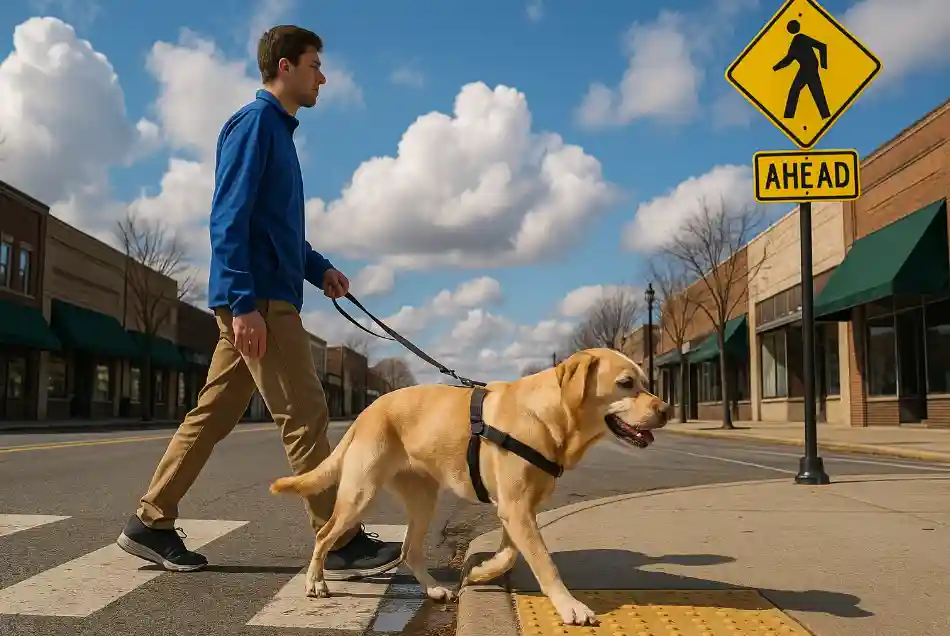
- Getting onto curbs or stairs during walks
- Entering or exiting vehicles
- Stepping onto exam tables at the vet
- Moving onto grooming platforms
It’s especially useful if you live in an urban area or have a multi-level home. I can’t count how many times this command has saved us from a stumble on a dark sidewalk.
Tips for Success
- Keep sessions short—5 to 10 minutes is plenty.
- End on a positive note, even if progress is slow.
- Use a consistent tone and phrase for the command.
- Be patient. Every dog learns at their own pace.
Resources for Blind Dog Training
- AKC: Training Tips for Blind Dogs
- PetMD: How to Train a Blind Dog
- Blind Dog Rescue Alliance: Resources
For more on training and living with blind dogs, check out these related guides:
- Blind Dog Enrichment
- Dog Obedience Basics
- Positive Reinforcement Training
- Dog Safety At Home
- Grooming Blind Dogs
Final Thoughts
Teaching the step-up command to my blind dog wasn’t always easy, but it’s made a world of difference in our daily life. The first time they confidently hopped onto a curb without hesitation, I’ll admit—I got a little misty-eyed. That’s what finally worked for me: patience, consistency, and a lot of treats. Give it a try, and you might be surprised at how quickly your dog adapts.
FAQs: Teaching Blind Dogs the Step-Up Command
- How long does it take to teach a blind dog the step-up command?
- Most dogs learn the basics in a week or two with daily practice, but every dog is different. Consistency is key.
- What treats work best for blind dogs in training?
- Strong-smelling, soft treats like cheese or chicken tend to work best, as scent is a blind dog’s strongest sense.
- Can I use the step-up command for stairs?
- Yes! Start with a single step and gradually increase difficulty. Always supervise for safety.
- Is it safe to teach a blind dog new commands?
- Absolutely. In fact, new commands can boost confidence and help your dog navigate the world more safely.
- What if my dog seems afraid?
- Go slowly, use lots of encouragement, and never force your dog. If needed, consult a professional trainer experienced with blind dogs.
Teaching “come” to a deaf or blind dog is one of the most important skills you can work on together. It helps your dog safely move toward you, follow your guidance, and handle everyday moments like grooming or vet visits without pressure or force.
Training like this builds trust, confidence, and a strong bond — especially for dogs who rely on touch and consistency. Keep it positive, go at your dog’s pace, and set them up for success every step of the way.
Watch the video below to see how to teach the “come” cue using clear signals, gentle guidance, and reward-based steps that make learning feel safe and fun for your dog.