There’s something quietly magical about turning a plain roll of satin ribbon into a flower so realistic you have to touch it to be sure. Satin ribbon flowers have become one of the most loved crafts on Pinterest for a reason. They cost almost nothing to make. They never wilt. And once you learn the basic petal-and-flame technique… You can recreate almost any bloom you like. In this guide I’ve gathered three of the most beautiful satin ribbon flower tutorials I’ve come across — a classic red rose, a delicate hydrangea, and a cheerful gerbera daisy — each one beginner-friendly and each one stunning enough to display.
Whether you want to make a single rose for a gift, a bunch of hydrangeas for your home, or a bright gerbera for a hair clip, these three projects will give you everything you need to get started with satin ribbon flowers.
What You’ll Need for Satin Ribbon Flowers
The wonderful thing about ribbon flowers is how short the supply list is. Across all three projects, you’ll mostly reach for the same handful of items:
- Satin ribbon — around 2cm (about 1 inch) wide works beautifully for petals, in whatever flower colors you like, plus green for leaves
- Sharp scissors — for cutting clean petal shapes
- A candle or lighter — to seal and gently curl the ribbon edges (this is the secret to the realistic look)
- A hot glue gun — for assembling the petals
- Floral wire or a thin stem — if you want your flower on a stem
- A small piece of cotton or foam — to form the center of the bud
A quick safety note: several of these techniques use an open flame to seal the ribbon edges so they don’t fray. It only takes a second per petal, but always work over a clear surface, keep the flame away from the loose ribbon roll, and let hot petals cool before handling. Kids can absolutely enjoy these crafts — just have an adult handle the flame step.
1. Classic Satin Ribbon Rose
If you only make one ribbon flower, make this one. The satin ribbon rose is the project that hooks people — it looks intricate, but it’s really just the same simple petal repeated and layered. This tutorial from Ochayoo breaks it down step by step, and the finished rose looks remarkably close to the real thing.
Here’s the general approach you’ll see in the video: you start by cutting the red ribbon into a distinctive double-lobed petal shape — almost like a soft figure-eight — and you’ll need a good stack of them for a full bloom. Each petal’s edges are passed briefly over a flame, which both stops fraying and gives the satin that gentle curl and sheen that reads as “rose petal.” The center begins with a small ball of cotton wrapped in the first tight petals, then petal after petal is hot-glued around it, each one overlapping the last and opening slightly wider as you build outward. Green ribbon leaves and a little calyx finish it at the base, and a final careful pass of the flame curls the outer petals back for that just-blooming look.
Full tutorial credit: Ochayoo — be sure to visit their channel for the complete step-by-step.
Tips for a better rose: Cut your petals as uniform as possible so the layers sit evenly. Don’t rush the flame — a quick pass is enough; hold it too long and the satin scorches. And when you glue, let each petal cool a moment before adding the next, so they hold their shape.
2. Satin Ribbon Hydrangea Flowers
Where the rose is all about one dramatic bloom, the hydrangea is about charming abundance — dozens of tiny four-petal florets clustered together into one full, rounded flower head. It’s a wonderfully relaxing project once you get into the rhythm of it, and the result looks gorgeous in a vase or as part of a larger arrangement. This 4K tutorial from Cyzeco Satin Ribbon Flowers shows the process beautifully.
Here is how this one comes together: the white ribbon is measured and cut into small, even squares (a ruler helps keep them uniform), and each square is shaped into a petal with a quick pass over the flame. Instead of gluing, the petals for each little floret are stitched together at the base with needle and thread into a five-petal blossom, with a tiny stamen threaded through the center. The real magic is the finishing touch: each floret is gently hand-painted with a soft purple at the petal tips and blended with a little water, giving that dreamy lilac-hydrangea gradient. Finished florets are then wired onto thin green stems, grouped five at a time onto a longer stalk, and gathered into the full, rounded flower head.
Full tutorial credit: Cyzeco Satin Ribbon Flowers — visit their channel for the complete walkthrough.
Tips for hydrangeas: Because you’re making many small florets, set up a little assembly line — cut all your pieces first, then seal, then assemble. Consistency in the small petals is what makes the finished cluster look full and professional. Pastel blues, purples, and pinks give the most realistic hydrangea effect.
3. Satin Ribbon Gerbera Daisy
The gerbera is the cheerful one — bright, bold, and instantly recognizable with its ring of slim petals around a textured center. It’s a great project if you love vivid colors, and it makes a perfect hair clip, brooch, or gift-topper. This tutorial, also from Ochayoo, walks through the whole thing.
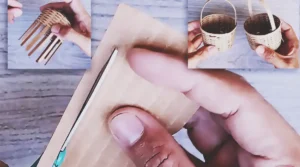
This one is a clever two-part build, and it is all about that classic daisy silhouette. The signature center starts with narrow black ribbon finely fringed along one edge into a comb of thin strands, then wrapped tightly around a wire stem to form the dense, dark textured eye. For the petals, white ribbon is cut into small squares and then into slim individual petals, each one shaped and sealed with a quick pass of the flame so it holds a gently pointed, curved form. The petals are grouped into small fans and then layered in rings around the black center, building up rows until you get that full, radiating gerbera shape. A wire stem is pushed through the middle, and green ribbon leaves are added as a calyx at the base and wrapped down the length of the stem to finish — giving you a complete, lifelike white gerbera on a stem.
Full tutorial credit: Ochayoo — head to their channel for the full tutorial.
Tips for gerberas: Gerberas are all about that double row of petals, so cut plenty. Slightly pointed petal tips give the most authentic daisy shape, and a contrasting center color (a deep brown or golden yellow) makes the flower pop.
Tips for Making Beautiful Satin Ribbon Flowers
- Choose the right ribbon width. Around 2cm is versatile for most flowers; wider ribbon makes bigger, bolder blooms.
- Master the flame first. Practice sealing a few scrap petals before you start — a quick pass seals and curls; lingering scorches.
- Cut in batches. Cutting all your petals before you assemble makes the whole process faster and more consistent.
- Layer patiently. Let hot glue set for a moment between petals so each holds its position.
- Add leaves last. Green ribbon leaves and a calyx at the base turn a nice flower into a realistic one.
Frequently Asked Questions
What ribbon is best for making satin ribbon flowers?
Double-faced satin ribbon around 2cm (1 inch) wide is ideal for beginners — it’s shiny on both sides, holds a curl well when sealed with a flame, and is easy to find in a wide range of colors.
Do I have to use a flame to make ribbon flowers?
The flame does two jobs: it stops the cut edges from fraying and gives the petals a natural curl. You can seal edges with clear-drying fabric glue as a no-flame alternative, though you’ll lose some of the realistic curl. If you do use a flame, work carefully over a clear surface and let petals cool before handling.
How long does it take to make a satin ribbon rose?
Once you’re comfortable with the petal shape and flame technique, a single rose takes roughly 30–45 minutes. Your first one will take longer — that’s normal. The hydrangea takes longer because of the many small florets, while a gerbera falls somewhere in between.
What can I do with finished satin ribbon flowers?
They’re wonderfully versatile: display them in a vase as everlasting blooms, attach them to hair clips or headbands, use them as brooches, decorate gift boxes and cards, or add them to wreaths and home decor. Because they never wilt, they last for years.
Start Your First Satin Ribbon Flower Today
Satin ribbon flowers are the perfect blend of easy, affordable, and genuinely impressive — the kind of craft where your very first attempt still turns out something you’ll want to keep. Start with the rose to learn the core petal-and-flame technique, then branch out into hydrangeas and gerberas once you’ve got the rhythm. A huge thank you to Ochayoo and Cyzeco Satin Ribbon Flowers for these beautiful tutorials — give their channels a visit and some love if you enjoyed these projects.
Which flower will you try first? Once you start, it’s hard to stop at just one.
Posted by: Med Houssem · In: DIY, Flower Crafts